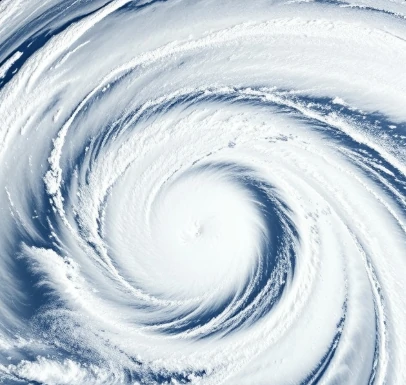
Air spirals inward around a center of low pressure. That rotating system is a cyclone. In the Northern Hemisphere the circulation is counterclockwise; in the Southern Hemisphere it is clockwise. The term covers a wide range of scales, from mid-latitude lows to intense tropical storms.
Rising air near the center produces clouds and precipitation. The strongest winds usually occur where the pressure gradient is steepest. Mid-latitude cyclones draw energy from temperature contrasts; tropical cyclones draw energy from warm ocean water.
Forecasters track these systems with surface observations, satellite imagery, and model guidance. Their paths determine where rain, snow, or high winds will occur. Some cyclones remain weak and produce only light precipitation; others become major storms that disrupt transportation and power for days.
- Rotating winds around low pressure
- Produces rising air and precipitation
- Includes mid-latitude and tropical types
- Steered by larger-scale flow
Comments (2)
Leave a comment