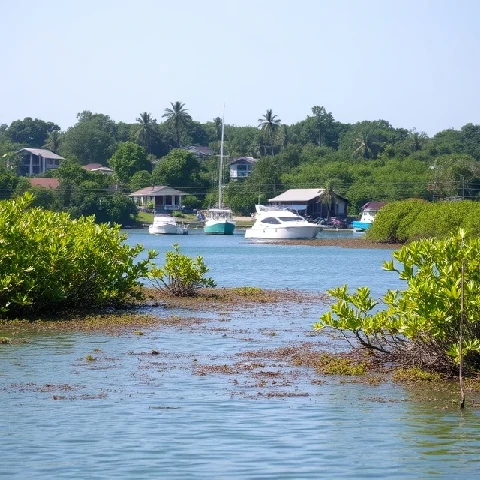
Mangroves are trees that grow in salty coastal water. They have adapted to survive where most plants cannot. Their roots arch above the water, anchoring them in soft mud and taking in oxygen. Some species excrete salt through their leaves. Others block it at the roots. Seeds germinate while still attached to the parent tree, giving seedlings a head start.
Mangrove forests line tropical and subtropical coastlines. They protect shorelines from storms and erosion. The dense roots absorb wave energy and hold sediment in place. After the 2004 Indian Ocean tsunami, villages behind mangroves suffered less damage than those without. The forests also serve as nurseries for fish and shrimp. Many commercial species spend their early lives among the roots.
Mangroves are disappearing. Aquaculture, agriculture, and coastal development have cleared large areas. The global loss rate has slowed but remains significant. Restoration projects plant seedlings and restore hydrology. When successful, they bring back fish, protect coasts, and store carbon in waterlogged soils. A mangrove forest is one of the most effective carbon sinks per hectare.
Key features
- Salt tolerance
- Aerial roots
- Live seedling germination
- Storm protection
- Carbon storage
Comments
No comments yet. Be the first to share a thought.
Leave a comment