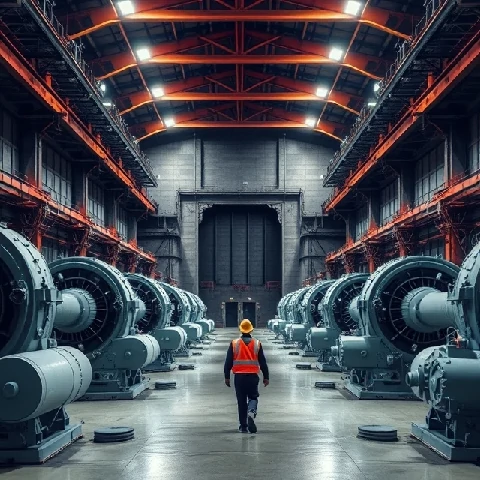
Pumped-storage hydro works like a giant battery. When electricity is cheap, pumps move water from a lower reservoir to an upper one. When demand spikes, the water flows back down through turbines, generating power. The same water cycles between two reservoirs for decades.
It is the oldest and largest form of grid energy storage. The first plants date to the 1890s. Today, pumped hydro accounts for over 90 percent of global storage capacity. A single plant can store thousands of megawatt-hours and discharge for hours or days. Round-trip efficiency is around 70 to 80 percent.
Its strengths are scale and duration. Batteries are cheaper for short bursts. Pumped hydro handles long periods. Its limits are geography and cost. It needs two reservoirs at different elevations, ideally close together. Building new plants takes years and faces environmental review. Still, it is essential for balancing grids with high shares of wind and solar.
Key features
- Two reservoirs at different heights
- Pumps and turbines
- Long duration storage
- High round-trip efficiency
- Geography-dependent
Comments
No comments yet. Be the first to share a thought.
Leave a comment