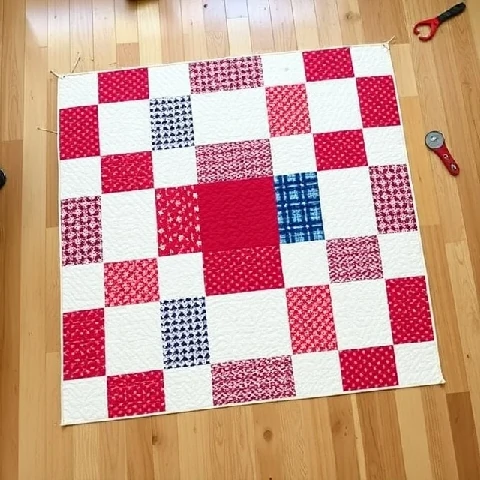
Patchwork joins small pieces of fabric into a larger textile. The pieces are cut to shape, then sewn edge to edge. The result can be a simple grid of squares or an intricate design with curves, triangles, and appliqué. Patchwork is often confused with quilting, but they are different steps. Patchwork makes the top. Quilting stitches the layers together.
Historically, patchwork was a practical way to use scraps. Farmers and settlers saved worn clothing and leftover cloth, cutting usable pieces into squares and sewing them into blankets. Today it is both a hobby and an art form. Modern makers use rotary cutters, acrylic rulers, and sewing machines, but hand piecing still has a following. English paper piecing, where fabric wraps around paper shapes and is stitched by hand, is portable and precise.
Common patchwork shapes
- Squares — the simplest and most forgiving
- Half-square triangles — two triangles sewn into a square
- Hexagons — used in English paper piecing and honeycomb patterns
- Curved pieces — for Drunkard's Path and similar designs
Accurate cutting matters more than speed. A quarter-inch seam allowance is standard. Small errors multiply across a large quilt top, and fixing them later is painful.
Comments
No comments yet. Be the first to share a thought.
Leave a comment