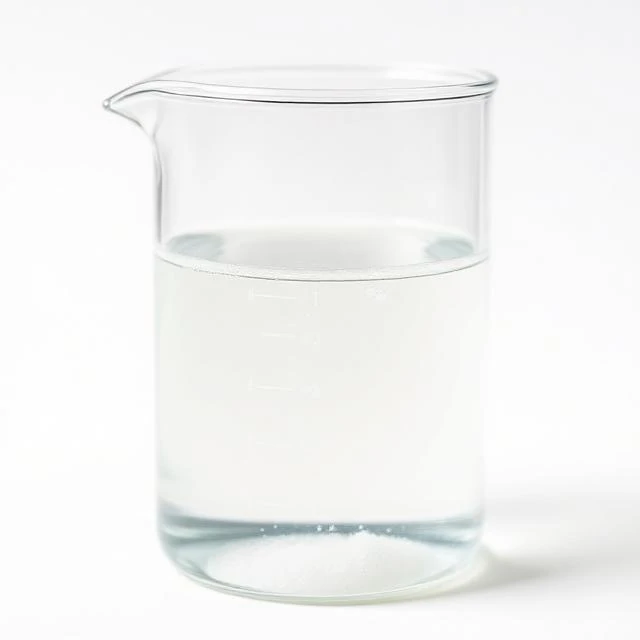
A solution is a homogeneous mixture of a solute dissolved in a solvent. The solute particles are evenly distributed throughout the solvent. The mixture is uniform, meaning any sample has the same composition. Saltwater, air, and brass are all solutions. The solute can be a solid, liquid, or gas. The solvent is usually a liquid, but it can also be a gas or a solid. The word solution comes from the Latin solvere, meaning to loosen or dissolve.
Solutions form when the solute and solvent interact favorably. The solute particles are separated from each other and surrounded by solvent molecules. This process is called solvation. It is driven by entropy and enthalpy. If the interactions between solute and solvent are stronger than the interactions between solute particles and between solvent particles, the solution forms. If not, the solute does not dissolve.
Solutions have properties that depend on the solute and solvent. Colligative properties, like boiling point elevation and freezing point depression, depend on the number of solute particles. Electrolyte solutions conduct electricity. The pH of a solution depends on the solute. The concentration of a solution is expressed in molarity, molality, or mass percent.
Solutions are everywhere. Blood is a solution. Seawater is a solution. Alloys are solid solutions. Gasoline is a mixture of hydrocarbons. Understanding solutions is essential in chemistry, biology, and industry.
Comments
No comments yet. Be the first to share a thought.
Leave a comment