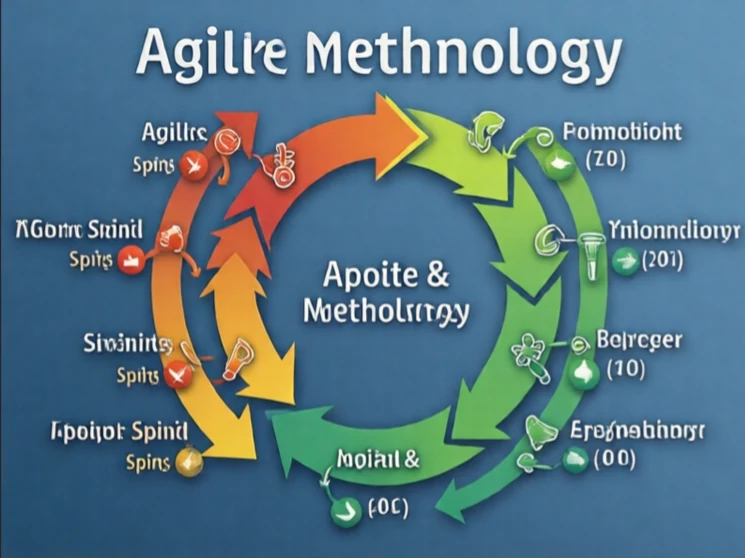
Software teams used to plan everything upfront, then build for months before showing anyone. Agile changed that. It is an iterative approach to project management and software development. Instead of one big delivery, you work in short cycles called sprints, usually two to four weeks long. Each sprint produces something working.
The Agile Manifesto, written in 2001 by a group of developers, laid out four values: individuals and interactions over processes and tools, working software over comprehensive documentation, customer collaboration over contract negotiation, and responding to change over following a plan. Scrum and Kanban are two popular frameworks. Daily stand-up meetings keep teams aligned. A product owner prioritizes the backlog. A scrum master removes obstacles. Agile has spread beyond software to marketing, HR, and even manufacturing. It is not a cure-all. Without discipline, it can become chaotic. But when it works, it lets teams adapt to change instead of being crushed by it.
Core ideas
- Sprints: short, fixed-length work cycles
- Stand-ups: brief daily sync meetings
- Backlog: prioritized list of work
- Retrospective: team reflection after each sprint
- Iteration: build, test, learn, repeat
Comments
No comments yet. Be the first to share a thought.
Leave a comment