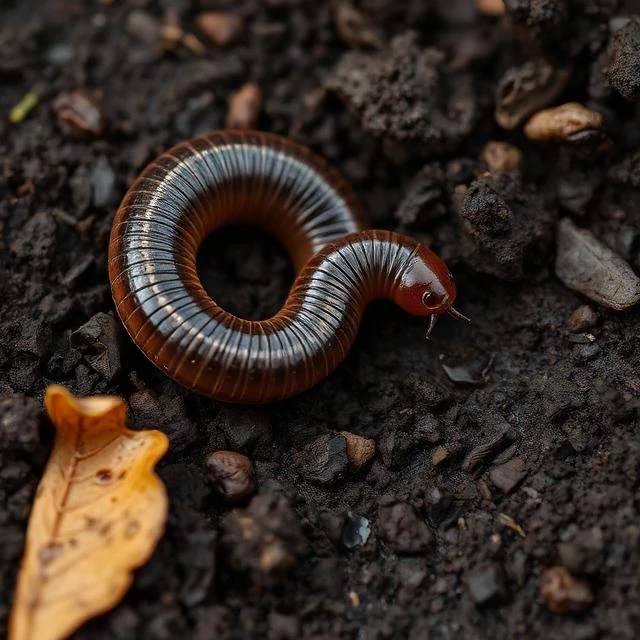
A soil-dwelling worm that improves soil structure and fertility.
🪱
Earthworms are soil-dwelling annelid worms of the class Oligochaeta, found in most terrestrial ecosystems where moisture and organic matter are present. Common agricultural species include the common earthworm (Lumbricus terrestris), the red wiggler (Eisenia fetida), and the grey field worm (Aporrectodea caliginosa). They feed on decaying organic matter and soil, passing it through their guts and excreting nutrient-rich castings. Their burrowing aerates soil, improves water infiltration, mixes organic matter, and enhances soil structure. Charles Darwin's 1881 book 'The Formation of Vegetable Mould through the Action of Worms' was among the first to recognise their importance. Earthworms are sensitive to tillage, pesticides, acidity, and low organic matter, so their presence is a good indicator of soil health. Vermicomposting uses red wigglers to convert food scraps and manure into compost. Earthworms also contribute to carbon and nitrogen cycling and are a food source for birds, moles, and other wildlife.
Comments
No comments yet. Be the first to share a thought.
Leave a comment