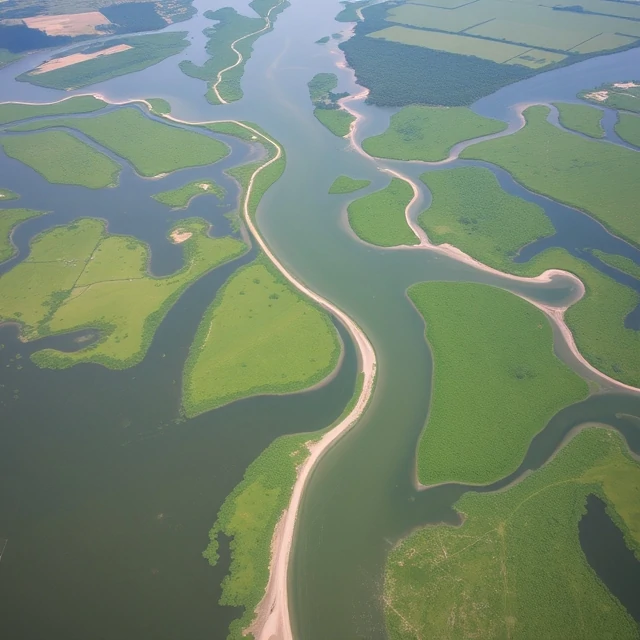
A river reaching standing water loses energy and drops its sediment. A delta is the low-lying landform built by that accumulation at the river mouth. Distributary channels split and shift, creating a characteristic triangular or bird-foot plan view.
Topset, foreset, and bottomset beds record the interplay of river supply and basin processes. Waves and tides reshape the shoreline, producing wave-dominated or tide-dominated deltas that differ in outline from purely fluvial ones. Fertile soils and abundant water have long attracted human settlement.
Modern deltas face reduced sediment supply from upstream dams and rising sea level that threatens inundation. Subsidence from sediment compaction and fluid extraction compounds the problem. The ongoing contest between deposition and relative sea-level rise determines whether a delta grows or shrinks.
- Sediment landform at a river mouth
- Built by deposition as flow decelerates
- Features shifting distributary channels
- Vulnerable to sea-level rise and sediment starvation
Comments
No comments yet. Be the first to share a thought.
Leave a comment