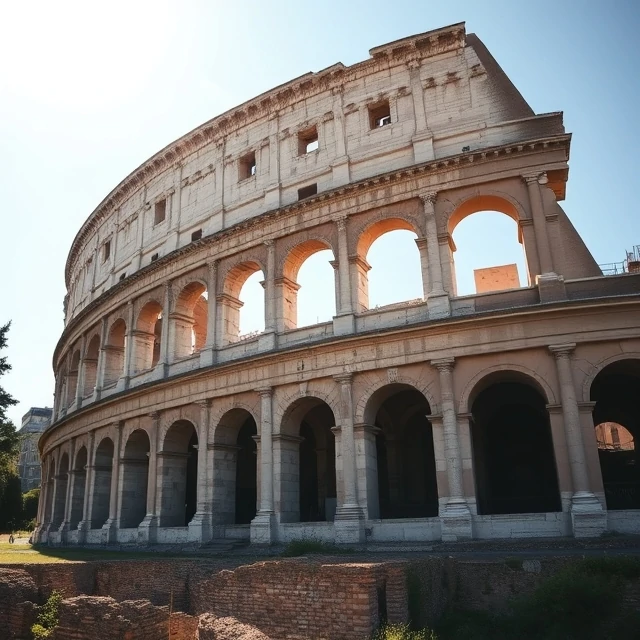
From a city on the Tiber a Mediterranean-spanning state emerged. The Roman Empire, conventionally dated from 27 BCE when Augustus established sole rule, controlled vast territories in Europe, North Africa, and the Near East until the deposition of the last western emperor in 476 CE. The eastern half continued as Byzantium.
Roman law, roads, cities, and military organization integrated diverse peoples. Latin and Greek served as languages of administration and culture. Emperors combined military command with religious and civic authority. Economic networks moved grain, wine, olive oil, and luxury goods across long distances.
The empire’s decline in the west involved internal strains and external pressures; explanations remain debated. Its legal and cultural legacy shaped medieval and modern Europe. Archaeological remains and a rich literary tradition make it one of the most intensively studied ancient states.
- Mediterranean empire centered on Rome
- Conventionally 27 BCE to 476 CE in the west
- Integrated diverse regions through law and infrastructure
- Left enduring legal and cultural influence
Comments (3)
Leave a comment