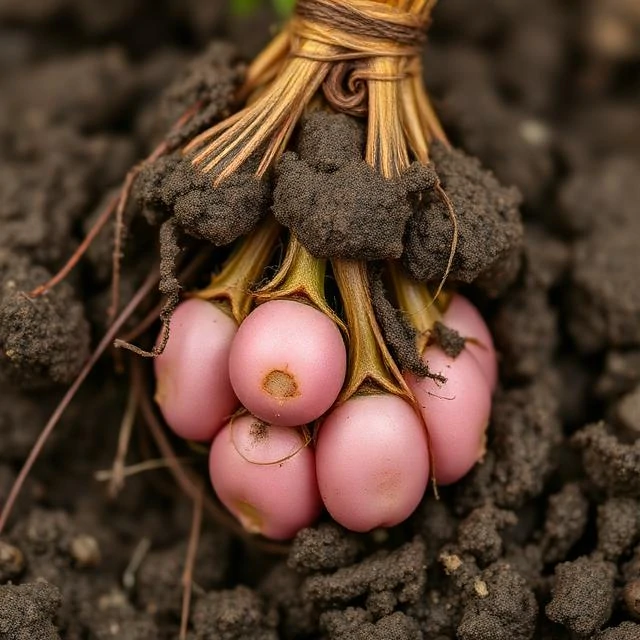
Nitrogen fixation is the conversion of atmospheric nitrogen gas into compounds plants can use. It happens in two main ways: industrially, through the Haber-Bosch process, and biologically, through bacteria that carry the enzyme nitrogenase.
Biological fixation is the older route. Rhizobia bacteria live in nodules on legume roots, receiving sugars from the plant in exchange for ammonia. Free-living soil bacteria such as Azotobacter and cyanobacteria in flooded rice paddies also fix nitrogen. Some non-legume plants, like alder trees and certain tropical grasses, host associative or symbiotic fixers too.
Why it matters on a farm
- Legume rotations supply nitrogen to following cereals
- Green manures like vetch and clover fix nitrogen in place
- Fixation reduces reliance on synthetic fertiliser
- It also builds soil organic matter over time
Fixation is not unlimited. It slows when soil nitrogen is already high, because the bacteria get less sugar from the plant. Drought, low phosphorus, and acidic soil all reduce it. Managing those conditions is part of making the partnership work.
Comments
No comments yet. Be the first to share a thought.
Leave a comment