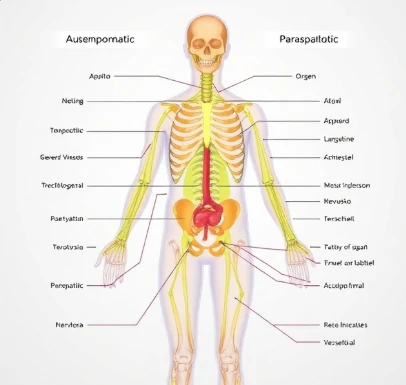
The autonomic nervous system controls the involuntary functions of the body—heart rate, digestion, breathing, sweating, and the regulation of internal organs. It operates largely outside conscious awareness yet is essential to survival.
It has two main divisions that often act in opposition. The sympathetic division prepares the body for action: it accelerates the heart, dilates the pupils, redirects blood to muscles, and releases adrenaline. The parasympathetic division promotes rest and recovery: it slows the heart, stimulates digestion, and conserves energy. A third division, the enteric nervous system, manages the gastrointestinal tract with considerable independence.
Both divisions are active at all times; the balance between them shifts with circumstance. Chronic sympathetic dominance is linked to stress-related illness. Biofeedback and certain meditation practices can increase voluntary influence over functions once thought entirely automatic, demonstrating that the boundary between voluntary and autonomic is not absolute.
Every time the heart quickens at a sudden noise or settles after a meal, the autonomic nervous system is adjusting the internal environment to meet the moment.
Comments
No comments yet. Be the first to share a thought.
Leave a comment