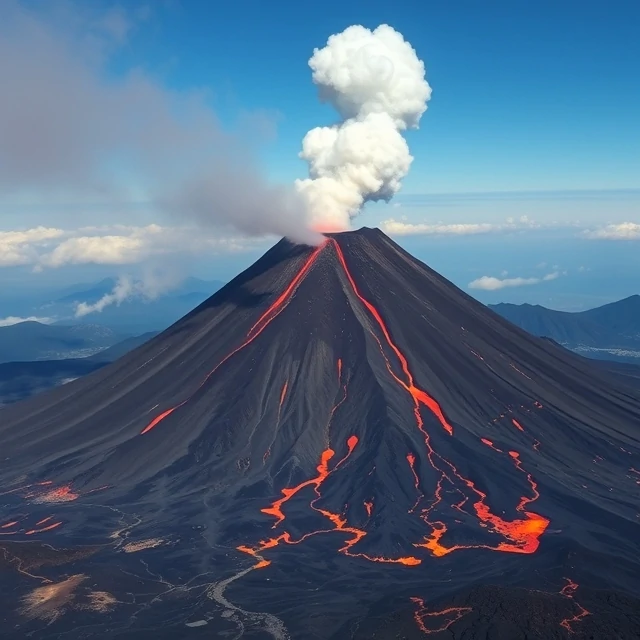
Molten rock from deep inside the Earth reaches the surface. A volcano is a vent or fissure through which lava, ash, and gases erupt, often building a mountain around the opening. Volcanoes occur mainly at tectonic plate boundaries and over mantle hotspots.
Eruptions range from gentle lava flows to explosive blasts that send ash high into the atmosphere. Volcanic soils are often fertile once weathered. At the same time, eruptions destroy settlements, disrupt air travel, and can affect global climate through sulfate aerosols.
Monitoring networks track seismic activity, gas emissions, and ground deformation to forecast eruptions. Millions of people live on or near active volcanoes, balancing the benefits of fertile land against the residual risk. The stark cone of a volcano remains one of the most recognizable landforms on the planet.
- Vent for lava, ash, and volcanic gases
- Builds mountains through repeated eruptions
- Located at plate boundaries and hotspots
- Both hazardous and a source of fertile soils
Comments
No comments yet. Be the first to share a thought.
Leave a comment