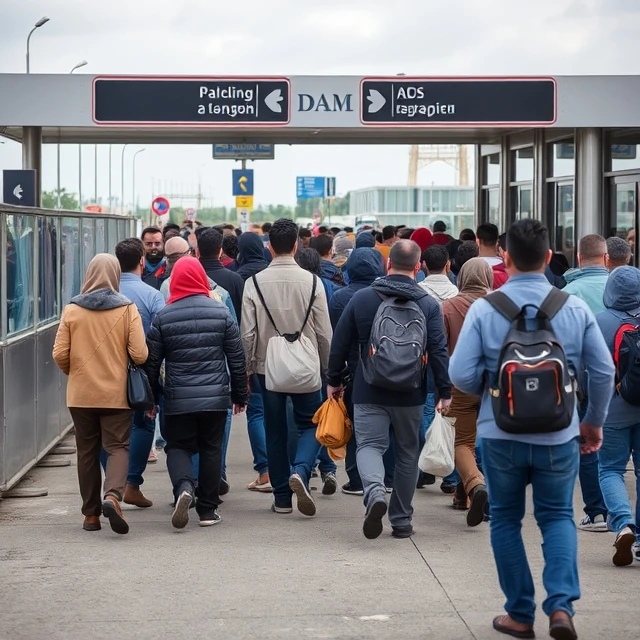
Emigration is the movement of individuals out of a population or area. It is the mirror image of immigration. When people leave a country, they are emigrants from the place they left and immigrants to the place they arrive. The same person can be both, depending on which end of the journey you are looking at. Demographers track emigration because it affects population size, labor supply, and the age structure of a country.
People emigrate for many reasons. Push factors drive them away: war, persecution, poverty, unemployment, drought, or lack of opportunity. Pull factors attract them elsewhere: jobs, safety, family connections, better schools, or higher wages. Most migration happens between neighboring countries, not across oceans. In 2020, the United Nations estimated that about 281 million people lived outside their country of birth, roughly 3.6 percent of the world's population. Remittances, the money emigrants send home, exceed foreign aid in many countries.
Common push and pull factors
- Economic: jobs, wages, cost of living.
- Political: conflict, persecution, instability.
- Environmental: drought, floods, sea-level rise.
- Social: family reunification, education.
Emigration can relieve pressure on local labor markets, but it can also drain a country of skilled workers. The effect depends on who leaves and whether they return.
Comments (2)
Leave a comment