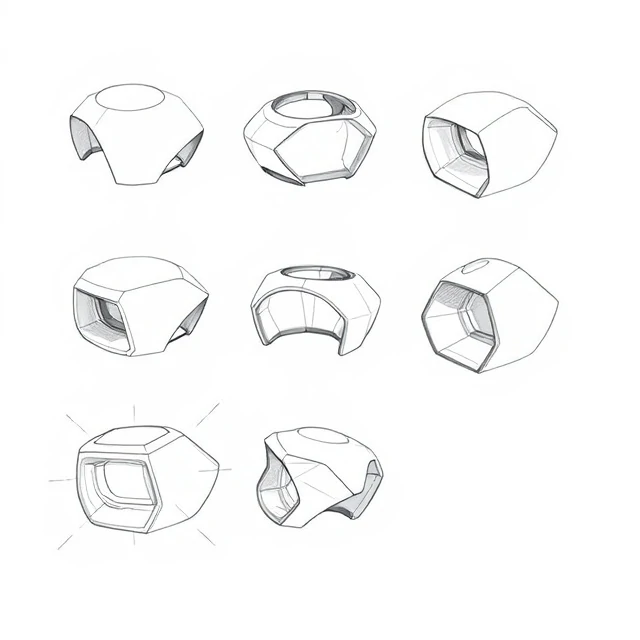
Form is the shape and structure of an object as defined by its outlines. It is what you see when you look at a thing. A chair has form. A logo has form. A website layout has form. Form is distinct from function, though the two are related. Function is what the object does. Form is what it looks like. A well-designed object unites the two. The form expresses the function. A teapot looks like it holds tea. A sports car looks fast even when parked.
Form in design operates on multiple levels. Two-dimensional form includes the shapes and outlines in a layout. Three-dimensional form includes the physical shape of a product. In both cases, form communicates. A sharp, angular form feels aggressive or modern. A soft, rounded form feels friendly or approachable. A symmetrical form feels stable. An asymmetrical form feels dynamic. These associations are not universal, but they are common. Designers use form to convey meaning before a single word is read. The relationship between form and function is not always harmonious. Some objects are beautiful but useless. Others are functional but ugly. The best design achieves both. It is not always possible. Constraints of manufacturing, cost, and physics limit what form can do. The designer works within those limits. The best form is the one that serves the function and delights the eye.
Form in design
- Shape — the outline of an object
- Volume — the three-dimensional space it occupies
- Silhouette — the recognizable outline
- Proportion — the relationship of parts to the whole
- Material — the substance that gives form its character
Form is how a design looks. Function is how it works. The best designs make them inseparable.
Comments
No comments yet. Be the first to share a thought.
Leave a comment