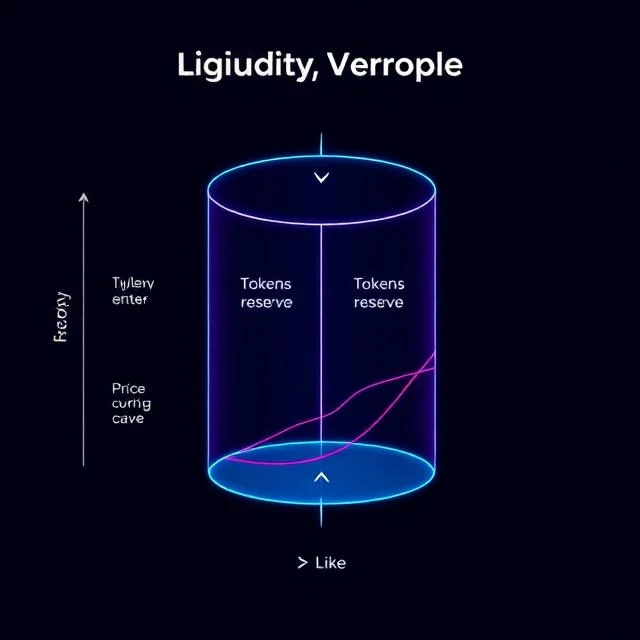
A liquidity pool holds tokens locked in a smart contract. Traders buy and sell against the pool instead of waiting for a counterparty. The pool's price comes from a formula, usually x times y equals k. When someone buys Token A, they add Token B to the pool. Token A becomes scarcer, so its price rises. The formula handles the rest automatically.
Liquidity providers deposit equal values of two tokens into the pool. In return, they earn a share of trading fees. The yield can be attractive, especially on volatile pairs. The risk is impermanent loss. If the price of one token moves sharply against the other, the provider ends up with less value than if they had simply held both tokens. The pool rebalances automatically, and that rebalancing works against the provider's interest during big price moves. Most providers earn enough in fees to offset the loss. Some do not.
Liquidity pool mechanics
- Constant product formula — x times y equals k
- Liquidity providers — deposit two tokens, earn fees
- Impermanent loss — price divergence reduces provider value
- Total value locked — the total deposits in a pool or protocol
Pools are the backbone of decentralized trading. Without them, DEXs would need order books and market makers. Pools replaced both with code.
Comments
No comments yet. Be the first to share a thought.
Leave a comment