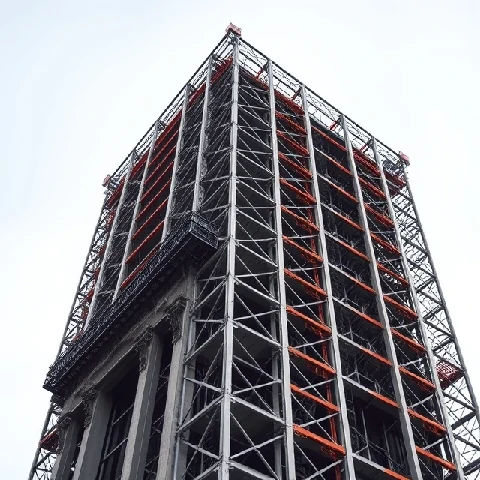
A steel frame is a skeleton of steel beams and columns supporting a structure. It is the most common structural system for high-rise buildings, large warehouses, and bridges. The steel frame carries the loads. The walls, floors, and roof hang off it or rest on it. Steel is strong, light, and fast to erect. It can be prefabricated in a shop and assembled on site. The steel frame made the skyscraper possible. It is the backbone of modern construction.
Steel frames come in several types. A braced frame uses diagonal braces to resist lateral forces. A moment frame uses rigid connections to resist bending. A tube frame uses a perimeter of closely spaced columns and beams. A truss frame uses triangulated members to span large distances. Each type has its own behavior and its own design. The choice depends on the height, the load, and the seismic zone. The connections are critical. A bolted connection is common. A welded connection is stronger but slower. The connection must transfer the load from the beam to the column. It must be designed by an engineer.
Steel frames have advantages. They are strong, ductile, and recyclable. They can be erected quickly. They can span long distances. They can be modified and strengthened. They also have disadvantages. Steel loses strength at high temperatures, so it must be fireproofed. Steel can corrode, so it must be painted or galvanized. Steel can buckle under compression, so it must be braced. The steel frame is a system. It must be designed, fabricated, and erected with precision. It is the skeleton of the building. It holds everything up.
Comments
No comments yet. Be the first to share a thought.
Leave a comment