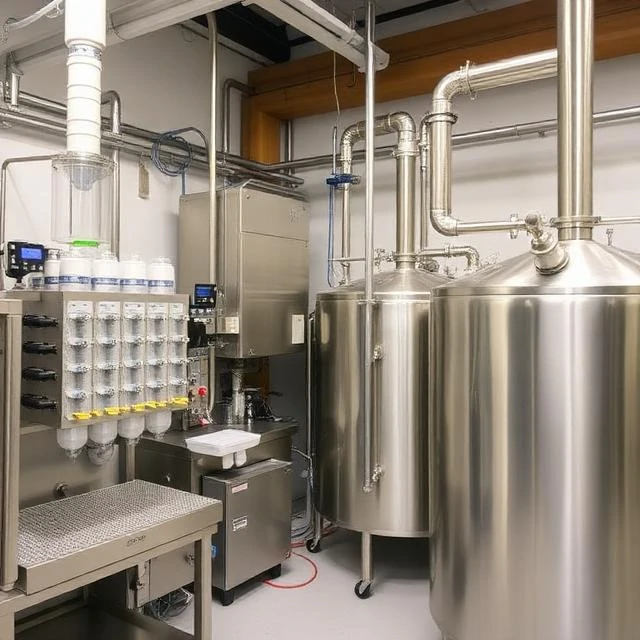
A bioreactor produces a broth full of cells, nutrients, and the product you want. The product might be a protein, an antibody, or a small molecule. It is a tiny fraction of the total volume. Downstream processing isolates and purifies it. It is the part of biomanufacturing that turns a biological soup into a usable product.
The steps vary by product but follow a general sequence. Recovery separates the cells from the liquid, often by centrifugation or filtration. Concentration reduces the volume. Purification uses chromatography to separate the product from impurities. Polishing removes trace contaminants. Formulation stabilizes the product for storage and delivery. Each step must be validated to ensure consistency.
Downstream processing is expensive. It can account for 60 to 80 percent of the total manufacturing cost. It is also where most failures occur. A purification step that works in the lab may not scale. A buffer that is cheap in small volumes may be prohibitively expensive in large ones. A product that is stable for a week may degrade over a month.
The goal is purity, yield, and reproducibility. A high yield of an impure product is useless. A pure product with a low yield is unaffordable. Downstream processing is a balancing act, and it is where bioprocess engineers earn their keep.
Comments
No comments yet. Be the first to share a thought.
Leave a comment