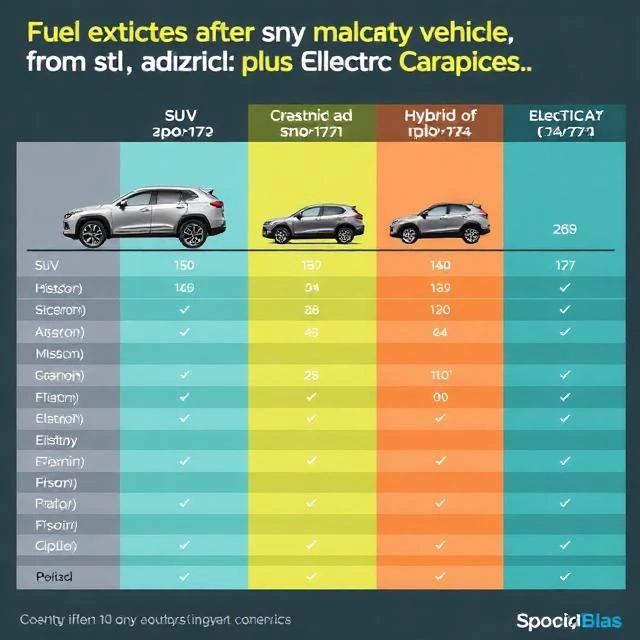
Fuel efficiency measures how far a vehicle can travel on a given amount of fuel. In the United States, it is expressed as miles per gallon. In most other countries, it is liters per 100 kilometers, where a lower number is better. The two are not linear. A car that gets 30 mpg uses 7.8 liters per 100 km. A car that gets 15 mpg uses 15.7.
Fuel efficiency depends on many factors. Engine design, vehicle weight, aerodynamics, tire rolling resistance, and drivetrain efficiency all matter. Driving habits matter just as much. Aggressive acceleration, high speeds, and excessive idling waste fuel. Maintaining proper tire pressure and removing roof racks improve efficiency. So does planning routes to avoid traffic.
The corporate average fuel economy standards, or CAFE, set minimum efficiency requirements for automakers in the United States. The standards have risen over time, pushing manufacturers to build more efficient vehicles. Electric vehicles are counted differently, and their efficiency is measured in miles per gallon equivalent, or MPGe. A typical EV gets over 100 MPGe.
Fuel efficiency is not the same as fuel economy, though the terms are often used interchangeably. Efficiency is a technical measure of how well fuel is converted to motion. Economy is the real-world result. Both matter for cost and emissions.
Comments
No comments yet. Be the first to share a thought.
Leave a comment