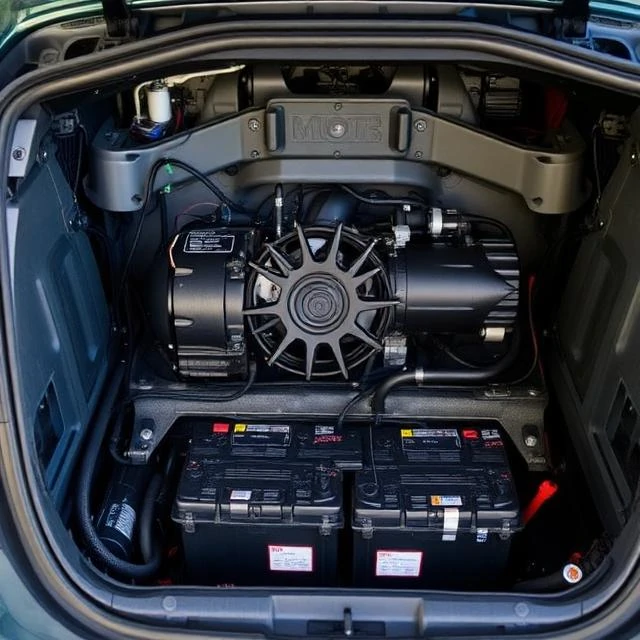
An electric motor converts electrical energy into mechanical rotation. It works on a simple principle: a current-carrying conductor in a magnetic field experiences a force. Arrange conductors on a rotor and magnets on a stator, and the rotor spins. Reverse the current, and the motor runs backward. That is how regenerative braking works in an electric car.
Electric motors come in different types. A DC motor uses direct current and brushes to commutate the current. An AC induction motor, invented by Nikola Tesla, uses alternating current and a rotating magnetic field. A permanent magnet synchronous motor uses magnets on the rotor and is common in EVs because it is efficient and powerful. Each type has trade-offs in cost, efficiency, and control.
In an electric vehicle, the motor does more than propel the car. It also acts as a generator during regenerative braking, converting kinetic energy back into electricity and storing it in the battery. That extends range and reduces wear on the friction brakes. Some EVs use two motors, one per axle, for all-wheel drive.
Electric motors are simpler than internal combustion engines. They have fewer moving parts, require less maintenance, and produce torque instantly from zero RPM. That instant torque is why EVs feel so quick off the line.
Comments
No comments yet. Be the first to share a thought.
Leave a comment