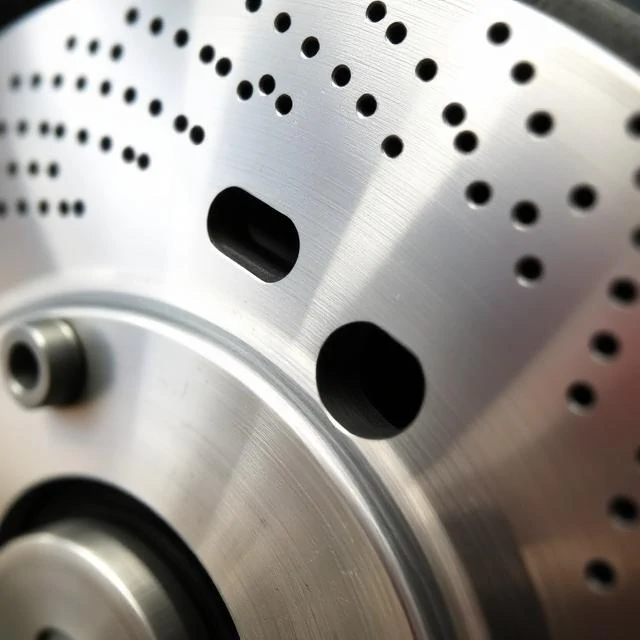
A disc brake stops a car by squeezing a rotating disc. The disc, called a rotor, turns with the wheel. A caliper straddles the rotor and holds two brake pads. When the driver presses the pedal, hydraulic pressure pushes pistons in the caliper, and the pads clamp down on the rotor. Friction slows the wheel, and the car stops.
Disc brakes have advantages over drum brakes. They dissipate heat better, so they resist fade during repeated hard stops. They are easier to service because the pads can be replaced without removing the wheel hub. They also self-adjust as the pads wear. That is why most modern cars use disc brakes on all four wheels, though some economy cars still use drums at the rear.
The rotor can be solid or vented. A vented rotor has internal vanes that pull air through, cooling it faster. Performance cars use drilled or slotted rotors to shed heat and gas. The pads also matter. Different pad compounds trade off noise, dust, wear, and stopping power. Ceramic pads are quiet and clean but expensive. Semi-metallic pads stop harder but wear faster and make more dust.
Disc brakes were first used on racing cars in the 1950s. They spread to production cars in the 1960s and became standard by the 1980s. They are one of the most important safety developments in automotive history.
Comments
No comments yet. Be the first to share a thought.
Leave a comment