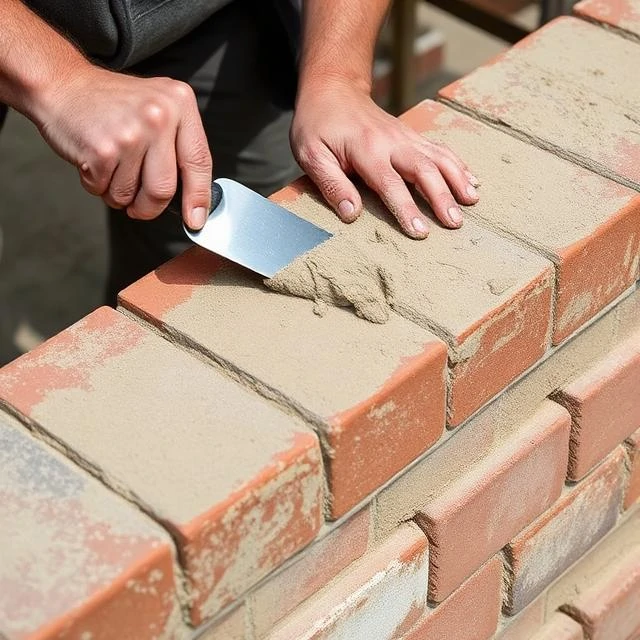
Mortar is the paste that binds bricks, stones, or blocks together in masonry. It is made from cement, sand, lime, and water. The mixture hardens over time, locking the units in place and sealing gaps against water and air.
Mortar is not just glue. It also accommodates slight movements between units, distributes loads evenly, and allows the wall to breathe. A mortar that is too hard can crack the bricks it holds. A mortar that is too soft can crumble. The right mix depends on the units and the exposure conditions.
There are different types of mortar. Type N is a general-purpose mix for above-grade walls. Type S is stronger and used for load-bearing walls and below grade. Type O is weaker and used for historic restoration where flexibility matters. Lime mortar, common before Portland cement, is softer and more permeable, which is why old buildings often need lime-based repairs.
Mixing and curing matter. Mortar that dries too fast loses strength. In hot weather, masons keep the mortar workable with water. In cold weather, they protect it from freezing. Small details, big consequences.
Comments
No comments yet. Be the first to share a thought.
Leave a comment