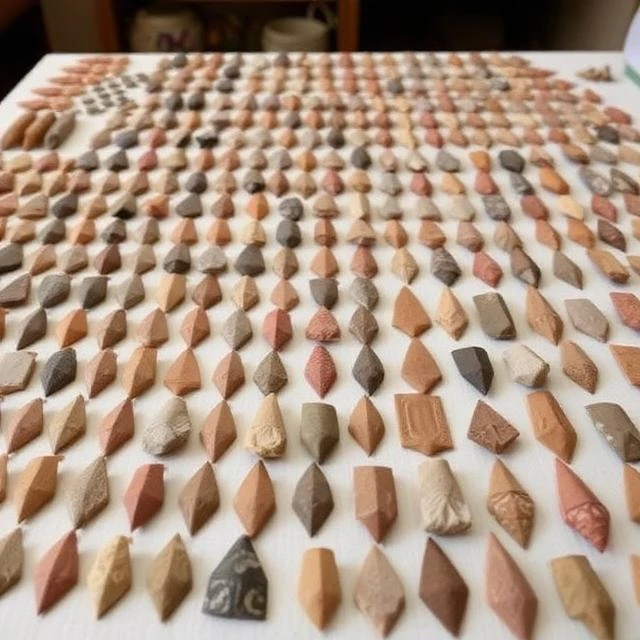
Typology is the classification of artifacts into types based on shared attributes. Archaeologists group tools by shape, material, size, and manufacturing technique. A type is a category that helps organize large collections and compare assemblages across sites. The same object might be classified differently depending on the question. A projectile point can be typed by its outline, its flaking pattern, or its assumed function.
Typology is not neutral. The categories archaeologists choose shape what they see. Early typologies were based on intuition and aesthetics. Later researchers introduced statistical methods and attribute analysis. Some types correspond to real cultural categories. Others are analytical conveniences. A type that appears in one region and period may be absent in another, which helps archaeologists date sites and trace contacts. But types can also mislead. Similar shapes may have different functions. Different shapes may serve the same purpose.
How types are built
- Select attributes: shape, size, material, technique.
- Group objects with shared attributes.
- Test whether groups are meaningful.
- Revise as new data appears.
Typology is a tool, not a truth. Its value depends on the question it is used to answer.
Comments
No comments yet. Be the first to share a thought.
Leave a comment