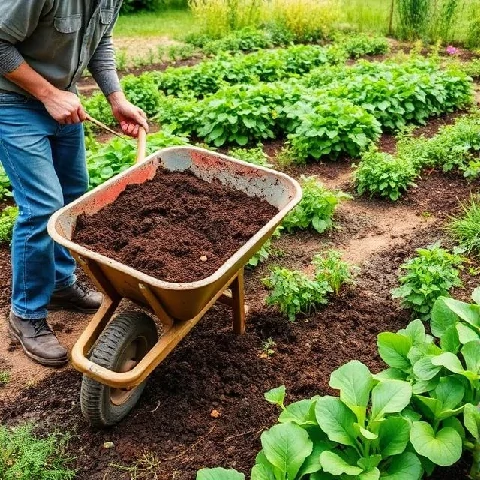
Manure is animal dung, often mixed with bedding straw or urine, used to fertilise soil. Farmers have spread it on fields for thousands of years, and it remains one of the most complete organic amendments available.
Fresh manure is not the same as composted manure. Fresh material can burn young plants with high ammonia and salt content, and it may carry pathogens or weed seeds. Composting or ageing it breaks down the harsh compounds and kills many pathogens, producing a stable, crumbly product that builds soil organic matter as well as feeding the crop.
Types and uses
- Cattle manure: low nutrient density, good for soil structure
- Poultry litter: high nitrogen and phosphorus, used sparingly
- Horse manure: often mixed with bedding, popular in gardens
- Green manure: unrelated, referring to crops ploughed in
Manure is also an environmental concern. Runoff from fields and feedlots carries phosphorus and nitrogen into waterways, feeding algal blooms. Timing applications to avoid rain, and incorporating manure into the soil, reduce the risk.
Comments (5)
Leave a comment