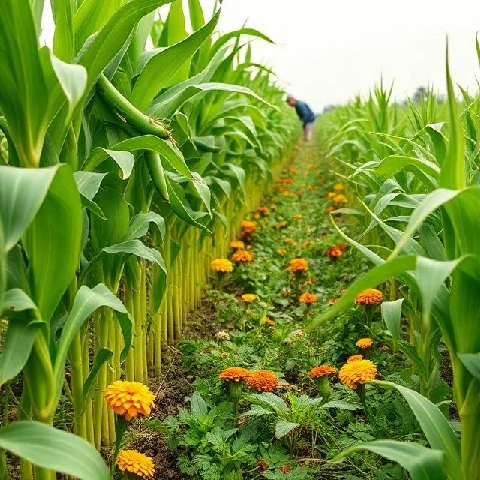
Agroecology is the application of ecological principles to the design and management of agricultural systems. It treats farms as ecosystems, emphasising biodiversity, nutrient cycling, soil health, natural pest regulation, and resilience rather than reliance on external chemical inputs. The term was first used in the 1920s by Russian agronomist Basil Bensin and gained prominence in the 1970s and 1980s through the work of scientists such as Miguel Altieri and Stephen Gliessman, who linked ecological theory to traditional farming knowledge. Agroecology draws on practices including intercropping, crop rotation, cover cropping, agroforestry, integrated pest management, and composting. Beyond agronomy, it has become a social and political movement advocating food sovereignty, farmer-led research, and equitable food systems, particularly in Latin America through organisations like La Vía Campesina. In 2014, the FAO hosted international symposia recognising agroecology as a pathway to sustainable food production. Proponents cite improved soil carbon, reduced input costs, and climate resilience; critics note potential yield trade-offs and the challenge of scaling labour-intensive methods to industrial volumes.
Comments
No comments yet. Be the first to share a thought.
Leave a comment