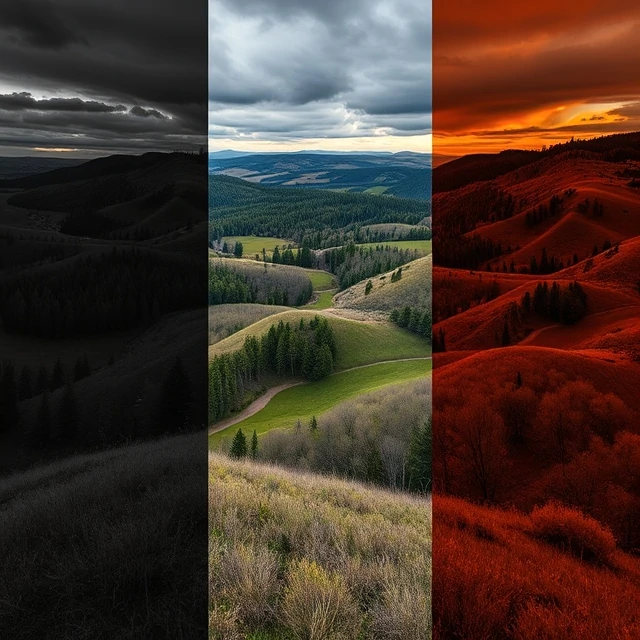
Some scenes have more contrast than a camera can capture. A bright sky and a dark foreground. A window and a dim interior. HDR, or high dynamic range, solves the problem by combining multiple exposures into a single image. One exposure captures the highlights. Another captures the shadows. A third captures the midtones. Software merges them, keeping the best detail from each. The result is an image with detail across a wider range of tones than any single exposure could hold.
HDR is not a single technique. It can be subtle, producing a natural-looking image with more detail in the shadows and highlights. Or it can be extreme, producing a surreal, over-processed look that some photographers love and others hate. The tone mapping step controls the final look. Some cameras have built-in HDR modes that automate the process. Others require bracketing and external software. HDR is useful for real estate, landscape, and architectural photography, where dynamic range is often extreme. It is less useful for portraits, where skin tones can become unnatural.
HDR steps
- Bracket. Take multiple exposures at different shutter speeds.
- Align. Correct for slight movement between frames.
- Merge. Combine exposures into a single high-bit-depth image.
- Tone map. Compress the dynamic range for display or print.
HDR is a tool, not a style. Used well, it is invisible. Used poorly, it is obvious.
Comments
No comments yet. Be the first to share a thought.
Leave a comment