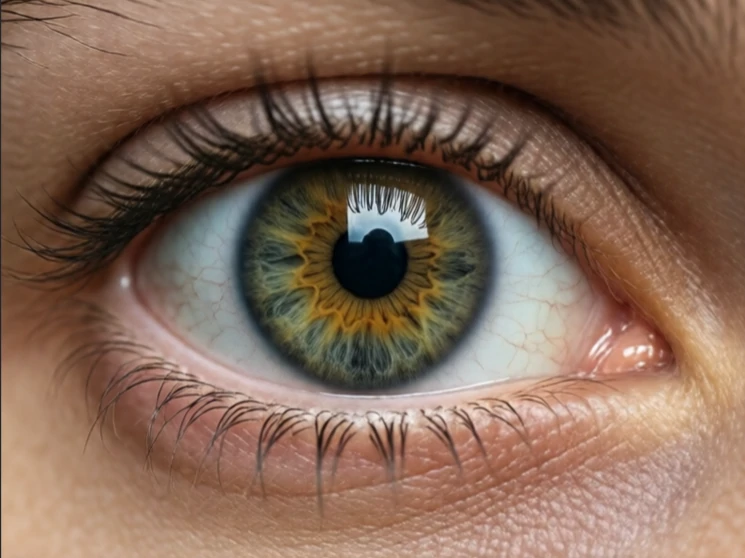
The iris is the colored ring of muscle tissue that surrounds the pupil and controls its size. By contracting or relaxing, it regulates the amount of light that enters the eye.
In bright light the iris constricts the pupil, reducing the light load on the retina and increasing depth of field. In dim light it dilates the pupil, admitting more light at the cost of some optical quality. The response is automatic and bilateral; light in one eye produces constriction in both. The color of the iris—determined by the amount and distribution of melanin—is one of the most visible individual differences in human appearance.
The iris also plays a minor role in accommodation and is the structure examined in iris-recognition security systems because its detailed pattern is highly distinctive. Certain drugs and neurological conditions affect pupil size by acting on the muscles of the iris, providing diagnostic information.
The iris is the eye’s aperture diaphragm. It continuously adjusts the light that reaches the photoreceptors.
Comments
No comments yet. Be the first to share a thought.
Leave a comment