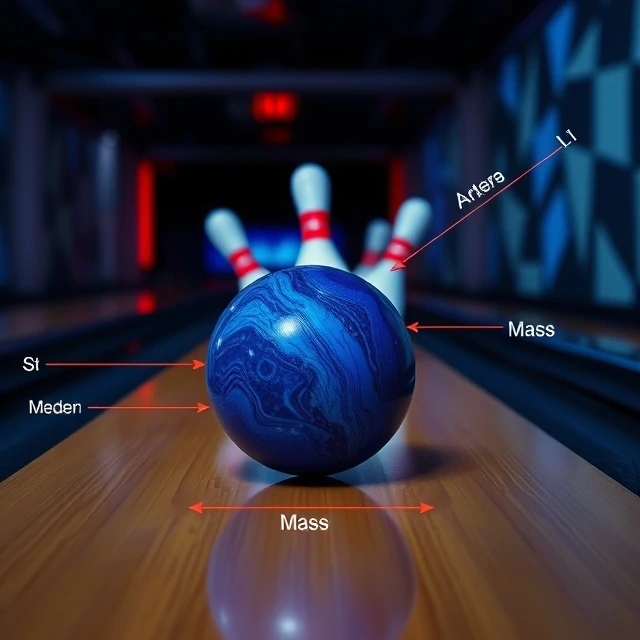
Momentum is the product of an object's mass and velocity. It is a vector, so it has both magnitude and direction. A heavy truck moving slowly can have more momentum than a light car moving fast. Momentum is measured in kilogram-meters per second. It is a conserved quantity, which means that in a closed system, the total momentum before an event equals the total momentum after. That is why a rocket works. It expels exhaust one way, and the rocket moves the other way. The total momentum of the system stays the same.
Momentum is closely related to force. Newton's second law is often written as force equals the rate of change of momentum. That form is more general than F = ma, because it works even when mass changes. A rocket loses mass as it burns fuel, so F = ma does not apply directly. But F = dp/dt does. Impulse is the change in momentum, and it equals force times time. That is why airbags work. They increase the time over which a collision occurs, reducing the force on the passenger. Momentum is also conserved in collisions, whether they are elastic or inelastic. In an elastic collision, kinetic energy is also conserved. In an inelastic collision, some kinetic energy is lost to heat or deformation, but momentum is still conserved.
Momentum facts
- Definition. Mass times velocity.
- Vector. Has magnitude and direction.
- Conserved. Total momentum in a closed system is constant.
- Force. Rate of change of momentum.
- Impulse. Force times time, equals change in momentum.
Momentum is not the same as kinetic energy. Momentum is a vector. Kinetic energy is a scalar. Both are conserved, but in different ways.
Comments
No comments yet. Be the first to share a thought.
Leave a comment