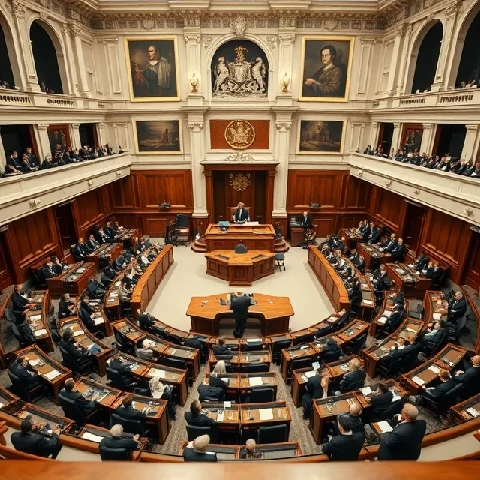
Political philosophy studies government, justice, and the state. It asks how power should be distributed, what makes a government legitimate, and what rights individuals have against the state. It is one of the oldest areas of philosophy, going back to Plato's Republic and Aristotle's Politics. It is also one of the most practical, shaping constitutions, laws, and revolutions.
Central questions include: What is justice? What is the best form of government? What is the basis of political obligation? What are the limits of state power? What is freedom, and how is it protected? Different traditions answer differently. Liberals emphasize individual rights and limited government. Conservatives emphasize tradition, order, and community. Socialists emphasize equality and economic justice. Anarchists reject the state altogether. Feminists examine how political structures shape and are shaped by gender. Critical race theorists examine how race and power intersect. Political philosophy is not just theory. It informs debates about taxation, immigration, healthcare, and human rights.
Key topics
- Justice. Fair distribution of benefits and burdens.
- Legitimacy. What makes a government rightful?
- Freedom. Negative and positive liberty.
- Equality. What should be equal, and why?
- Authority. When must we obey the state?
Political philosophy is not the same as political science. Political science studies how politics works. Political philosophy asks how it should work.
Comments (2)
Leave a comment