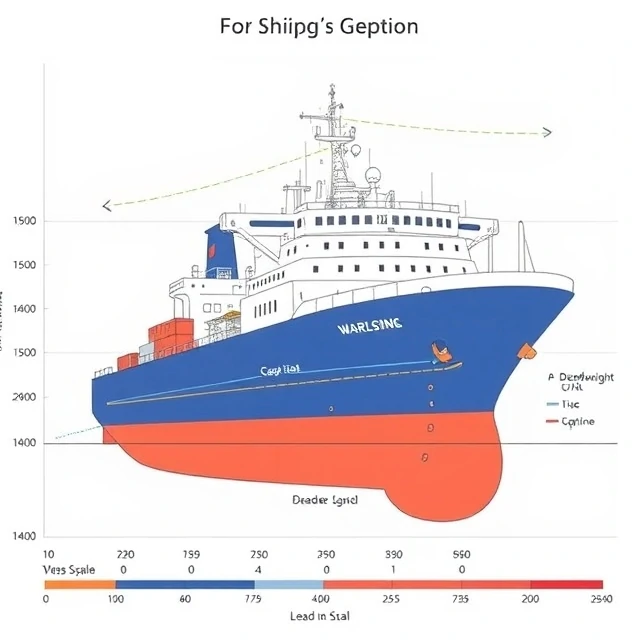
How much a ship can carry is a basic commercial fact. Deadweight tonnage is the difference between a ship’s loaded displacement and its lightweight; it represents the total weight of cargo, fuel, water, stores, crew, and effects that the ship can carry.
Deadweight is expressed in metric tons or long tons and is a key figure in chartering and sale-and-purchase. It is not a measure of volume; cubic capacity matters separately for light cargoes. Summer deadweight is the maximum at the summer load line; tropical and winter figures differ with the load-line zones.
Officers watch deadweight carefully during loading so that the ship does not exceed its permitted draft. Overloading is illegal and dangerous. Charter parties often specify cargo quantities in terms of deadweight available for cargo after accounting for fuel and constants.
- Total weight a ship can carry when loaded to maximum draft
- Includes cargo, fuel, water, stores, and crew
- Key commercial and safety parameter
- Varies with load-line zone and density of water
Comments
No comments yet. Be the first to share a thought.
Leave a comment