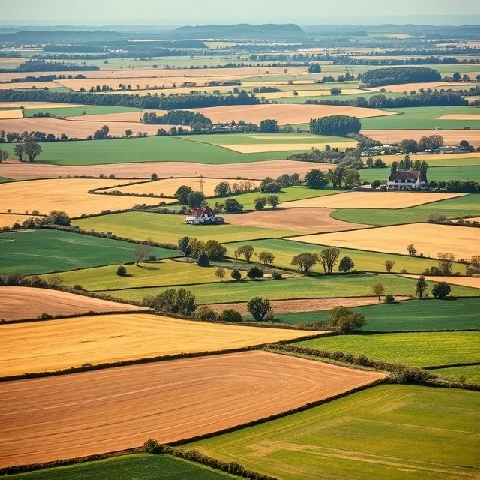
Outside the cities the density of people and buildings drops sharply. A rural area is a sparsely settled landscape dominated by agriculture, forestry, or natural vegetation rather than urban land uses. Villages and small towns may be present, but the overall character is non-urban.
Rural economies often center on primary production. Distances to services are greater, and infrastructure may be less developed. Cultural traditions and landscapes can persist longer than in rapidly changing cities. Yet rural areas are also connected to national and global markets through commodity chains.
Many rural regions face population decline as young people move to cities. Others experience counter-urbanization or the arrival of new residents seeking amenity. Planning for rural areas must balance resource production, environmental protection, and community viability.
- Sparsely populated non-urban landscape
- Dominated by agriculture or natural land
- Lower service density than cities
- Experiencing varied demographic trends
Comments
No comments yet. Be the first to share a thought.
Leave a comment