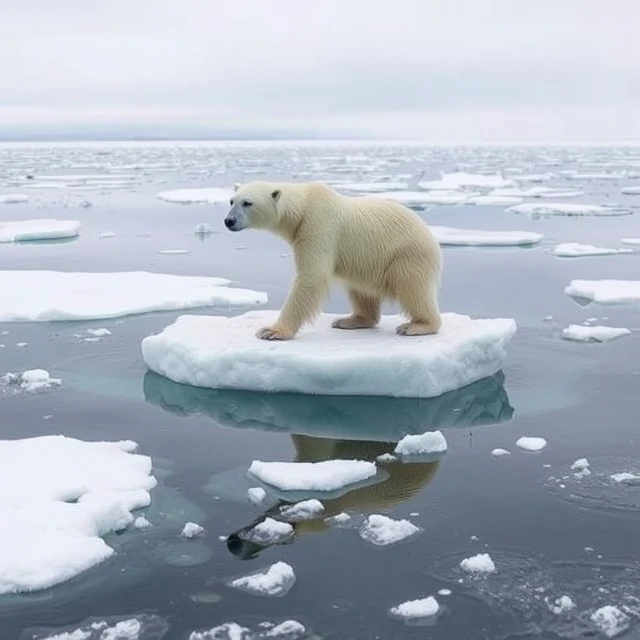
Global warming is the long-term rise in Earth's average surface temperature. It is driven by human emissions of greenhouse gases, mainly carbon dioxide and methane. Since pre-industrial times, the planet has warmed by about 1.1 degrees Celsius. Most of that warming has happened since 1980.
The effects are visible. Heat waves are more frequent and intense. Arctic sea ice is shrinking. Mountain glaciers are retreating. Sea levels are rising. Storms carry more moisture. Droughts last longer. The changes vary by region. Some places warm faster than others. The Arctic is warming nearly four times the global average.
Warming is not the same as weather. A cold winter does not disprove global warming. The trend is measured over decades. Individual years fluctuate. The long-term direction is clear and consistent with rising greenhouse gas concentrations. Scientists have understood the basic physics since the 1800s.
Main greenhouse gases
- Carbon dioxide
- Methane
- Nitrous oxide
- Water vapor (feedback)
- Fluorinated gases
Comments
No comments yet. Be the first to share a thought.
Leave a comment