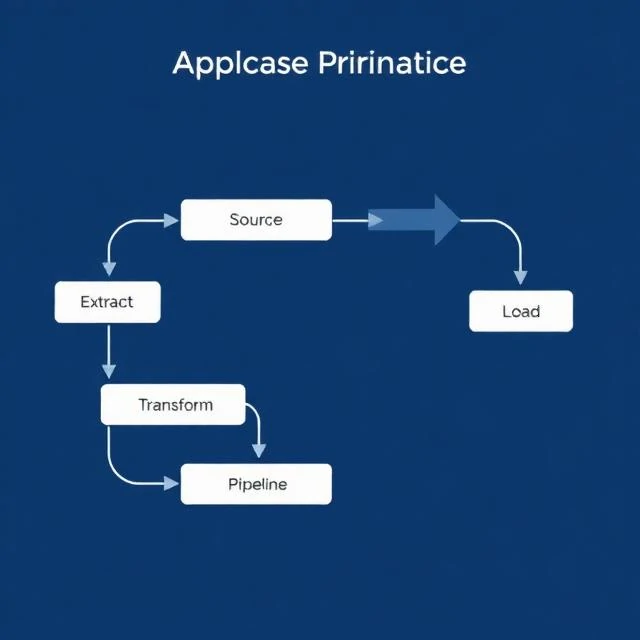
A data pipeline moves data from source to destination through a series of steps. Extract from the source. Transform it to fit the target. Load it into storage. Then make it available for analysis. The pipeline runs automatically, on a schedule or in response to events. It handles the plumbing so that analysts and data scientists can focus on using the data rather than moving it.
Pipelines range from simple to complex. A nightly job that copies a CSV file is a pipeline. A streaming system that processes millions of events per second is also a pipeline. The tools vary: Airflow, Dagster, Prefect for orchestration. Kafka, Kinesis, and Pub/Sub for streaming. dbt for transformation. The challenges are consistent. Sources change without warning. Data arrives late or malformed. Jobs fail at 2 a.m. and nobody notices until the morning report is empty. Good pipelines have monitoring, alerting, retry logic, and idempotent steps that can run twice without duplicating data. They are documented so that anyone can understand what they do. They are tested so that changes do not break downstream systems. A pipeline is infrastructure. Like any infrastructure, it works best when nobody has to think about it.
Pipeline stages
- Extract — pull data from sources
- Transform — clean, enrich, and reshape
- Load — write to the target system
- Orchestrate — schedule and coordinate steps
- Monitor — detect and alert on failures
A data pipeline is a supply chain for data. If it breaks, everything downstream stops.
Comments
No comments yet. Be the first to share a thought.
Leave a comment