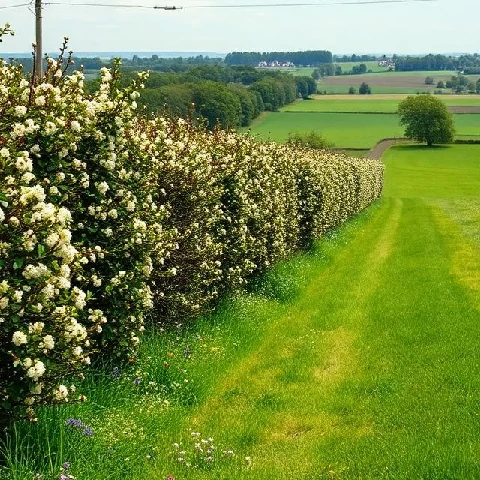
A hedgerow is a line of shrubs or small trees planted and managed as a boundary. In England, where the feature is most associated, many hedges date to the Enclosure Acts of the 18th and 19th centuries. Some are older, going back to medieval or even Roman field systems.
Hedges do more than mark property. They slow wind, which reduces soil erosion and protects livestock. They filter runoff, trap snow where it will melt into the soil, and shelter pollinators and pest-eating insects. Birds nest in them. Bats hunt along them.
Management traditions
- Laying: partially cutting stems and weaving them into a living fence
- Coppicing: cutting to the ground to force dense regrowth
- Trimming: mechanical flailing every year or two
- Gapping up: replanting holes to keep the line dense
After World War II, thousands of kilometres of hedgerow were ripped out to make bigger fields for bigger machines. That trend has partly reversed, and many countries now pay farmers to maintain and restore them.
Comments
No comments yet. Be the first to share a thought.
Leave a comment