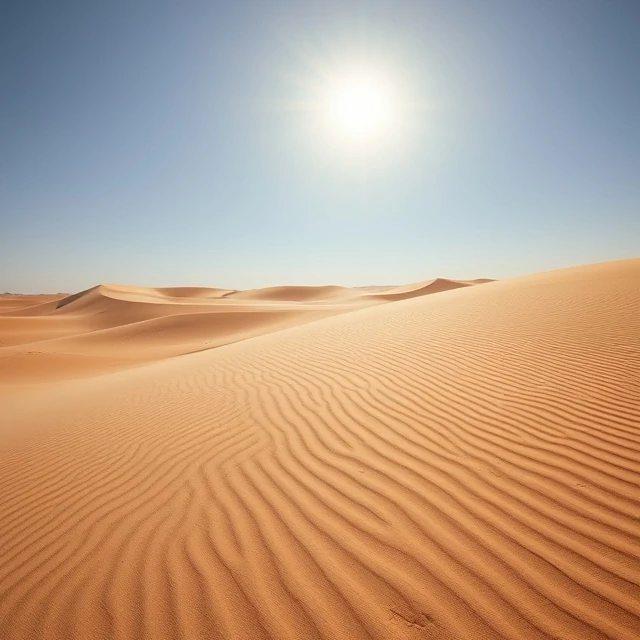
Sand dunes and bare rock stretch to the horizon under a relentless sun. A desert is a region that receives so little precipitation that plant and animal life is scarce. Most definitions use a threshold of roughly 250 millimeters of rain per year.
Hot deserts such as the Sahara experience extreme daytime heat; cold deserts such as the Gobi have frigid winters. Fog deserts along certain coasts receive almost no rain yet gain moisture from fog. Adaptations among desert organisms include water storage, nocturnal activity, and efficient kidneys.
Human use of deserts depends on irrigation, air conditioning, and often fossil water. Mining, tourism, and solar-energy installations are expanding in some desert regions. Despite their harshness, deserts support specialized ecosystems and striking landforms shaped by wind and rare floods.
- Very dry region with minimal precipitation
- Supports sparse, specialized life
- Includes hot and cold types
- Shaped by wind and occasional water
Comments
No comments yet. Be the first to share a thought.
Leave a comment