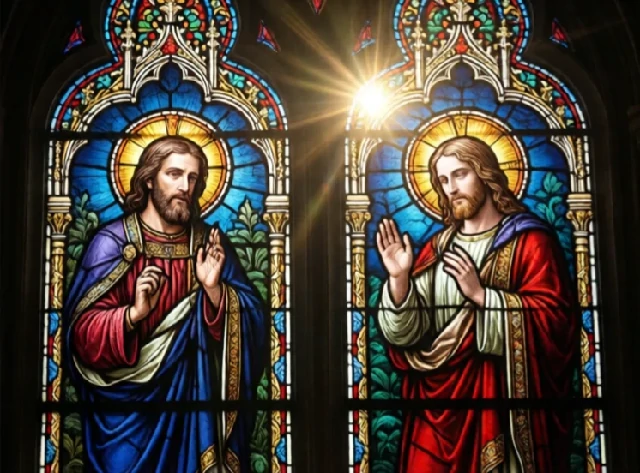
Christian faith confesses one God in three persons—Father, Son, and Holy Spirit. The doctrine of the Trinity is the church’s attempt to state that confession without falling into either polytheism or the denial of the full divinity of Christ and the Spirit.
The New Testament does not contain a formal treatise on the subject, yet it supplies the materials: the Father who sends, the Son who is sent and who shares the divine name and prerogatives, the Spirit who is poured out and who also shares the divine work. Early councils, especially Nicaea and Constantinople, rejected explanations that subordinated the Son or reduced the Spirit to a force. The resulting language of one ousia and three hypostases—one essence, three persons—became the classical formula.
The doctrine is not a puzzle to be solved but a mystery to be worshipped. It shapes prayer—to the Father, through the Son, in the Spirit—and it underwrites the claim that God is eternally relational rather than solitary. Analogies from human experience inevitably fall short; they may illustrate but cannot capture the reality.
For Trinitarian Christians, to know God is to be drawn into the life that the Father, Son, and Spirit share.
Comments
No comments yet. Be the first to share a thought.
Leave a comment