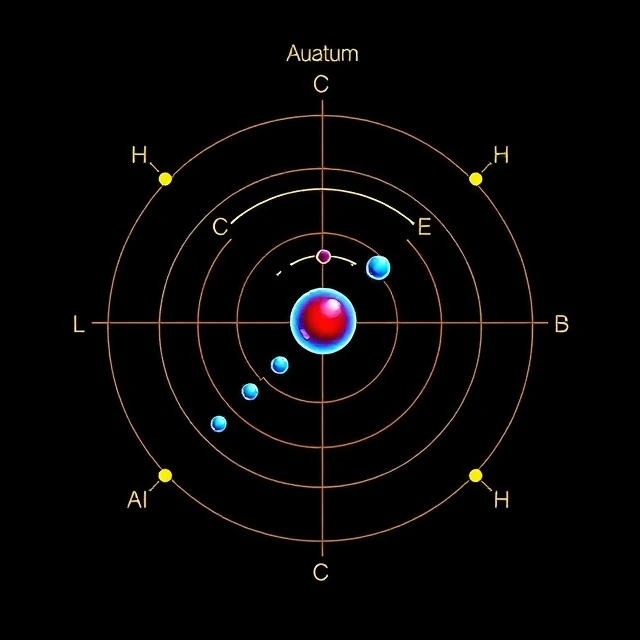
A quantum is the minimum discrete quantity of a physical property. The word comes from the Latin quantus, meaning how much. In physics, it refers to the smallest indivisible unit of something. Energy, for example, is quantized. It comes in discrete packets, not continuous amounts. A photon is a quantum of light. An electron is a quantum of charge, in the sense that charge is quantized in units of the electron charge. The discovery of quantization was one of the key breakthroughs of the early 20th century. Max Planck introduced the idea in 1900 to explain blackbody radiation. He proposed that energy is emitted and absorbed in discrete packets, which he called quanta. That idea launched quantum mechanics.
Quantization is not just about energy. It applies to many physical properties. Angular momentum is quantized. The energy levels of an atom are quantized. The spin of a particle is quantized. Quantization is what makes quantum mechanics different from classical mechanics. In classical mechanics, properties can take any value. In quantum mechanics, they take only specific values. That discreteness is what makes atoms stable, what makes lasers possible, and what makes quantum computing possible. The quantum world is strange, but it is the world we live in.
Quantum facts
- Definition. Minimum discrete quantity.
- Origin. Max Planck, 1900.
- Energy. Quantized in photons.
- Charge. Quantized in electron charge.
- Angular momentum. Quantized in units of ħ.
A quantum is not the same as a particle. A quantum is a unit of a property. A particle is a physical entity.
Comments
No comments yet. Be the first to share a thought.
Leave a comment