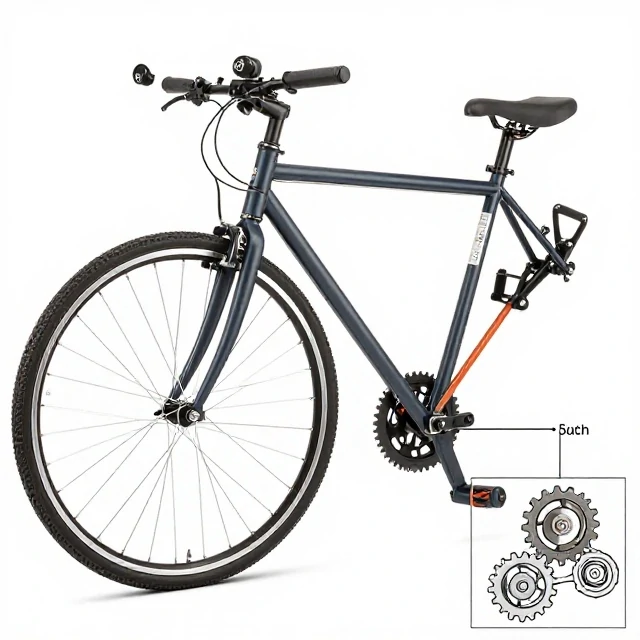
A compound machine combines two or more simple machines. A wheelbarrow is a lever and a wheel and axle. A bicycle is wheels, levers, and pulleys. A can opener is a lever, a wheel, and a wedge. The combination multiplies force, changes direction, or increases speed in ways a single simple machine cannot.
Simple machines are the basic mechanical devices: lever, wheel and axle, pulley, inclined plane, wedge, and screw. They trade force for distance. A lever lets you lift a heavy load with less force, but you move the lever a longer distance. A compound machine combines these trade-offs. A block and tackle is a compound pulley that multiplies force many times. A gear train is a compound wheel and axle that changes speed and torque.
Examples of compound machines
- Bicycle: wheels, levers, pulleys, gears.
- Wheelbarrow: lever and wheel and axle.
- Scissors: two levers and a wedge.
- Crane: levers, pulleys, and gears.
- Escalator: inclined plane and pulley system.
Compound machines are everywhere. A pair of scissors is two levers joined at a pivot. The blades are wedges. The handles are where you apply force. A crane uses a lever to lift the load, a pulley to change direction, and gears to multiply force. The mechanical advantage is the product of the advantages of each simple machine. A bicycle with a gear ratio of 4 and a wheel radius of 0.3 meters has a mechanical advantage that lets a rider climb hills. Compound machines do not create energy. They transform it. The trade-off is always force for distance, or speed for torque. That is the fundamental rule of mechanics.
Comments
No comments yet. Be the first to share a thought.
Leave a comment