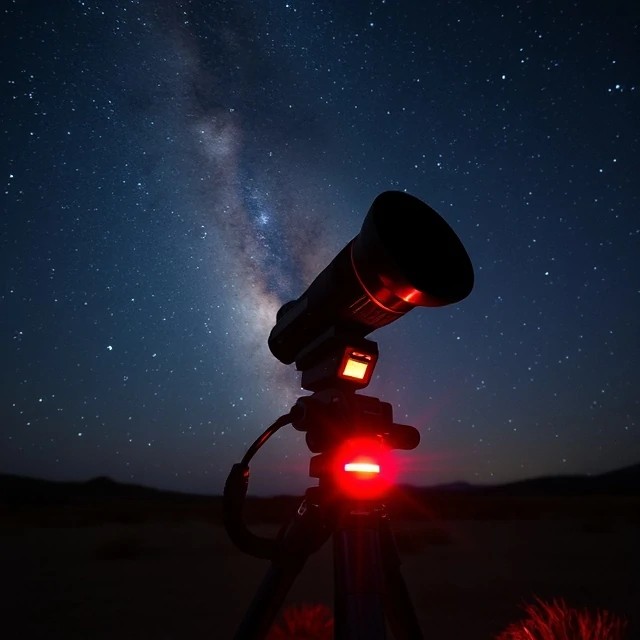
Point a camera at the night sky and leave the shutter open. The sensor collects photons that have traveled for thousands of years. Astrophotography is the practice of photographing celestial objects: stars, planets, the moon, nebulae, and galaxies. It ranges from simple star trails taken with a phone to deep-sky images requiring tracking mounts, cooled sensors, and hours of exposure.
The challenges are different from daylight photography. The Earth rotates, so stars move across the frame. Exposures longer than a few seconds produce trailing unless you use a tracking mount that rotates at the same rate. Light pollution washes out faint objects, so dark skies matter. Noise from the sensor competes with faint signals, so astrophotographers take many frames and stack them in software to improve the signal-to-noise ratio. Calibration frames, called darks, flats, and bias, correct for sensor artifacts.
Common targets
- Star trails. Long exposures or stacked short exposures showing Earth's rotation.
- Milky Way. Wide-field images of our galaxy's core.
- Deep sky. Nebulae, galaxies, and star clusters.
- Planetary. High-magnification video of the moon and planets.
The best astrophotography is often done in cold, remote places. The reward is a view of the universe that the unaided eye cannot see.
Comments (3)
Leave a comment