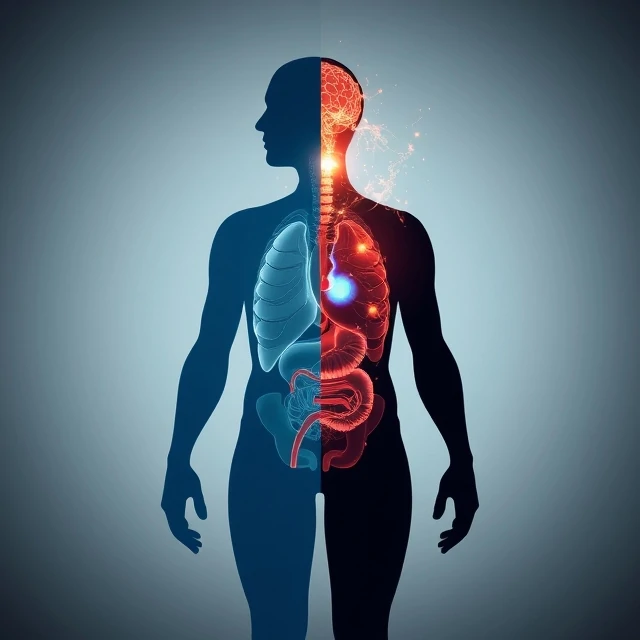
You have a body and a mind. The body is physical: it has weight, location, and parts. The mind is not. It thinks, feels, and decides. How do they relate? Dualism is the view that mind and body are distinct kinds of things. René Descartes gave the classic formulation. The body is extended substance, occupying space. The mind is thinking substance, without extension. They interact in the pineal gland, he suggested, though the details were never convincing.
Dualism comes in several forms. Substance dualism holds that mind and body are different substances. Property dualism holds that there is one substance, but mental properties are irreducible to physical ones. Epiphenomenalism says mental states are caused by physical states but have no causal power themselves. Interactionism says they cause each other. The main problem for dualism is explaining how an immaterial mind can affect a material body, and vice versa. If the mind has no physical properties, how does it push neurons? Critics argue that dualism violates conservation of energy and leaves consciousness mysterious. Defenders reply that consciousness is mysterious anyway, and that physicalism has its own explanatory gaps.
Versions of dualism
- Substance dualism. Mind and body are different substances.
- Property dualism. One substance, two kinds of properties.
- Interactionism. Mind and body causally interact.
- Epiphenomenalism. Mental states are byproducts of physical states.
Dualism remains influential in philosophy of mind, even among those who reject it. It frames the questions that physicalists must answer.
Comments
No comments yet. Be the first to share a thought.
Leave a comment