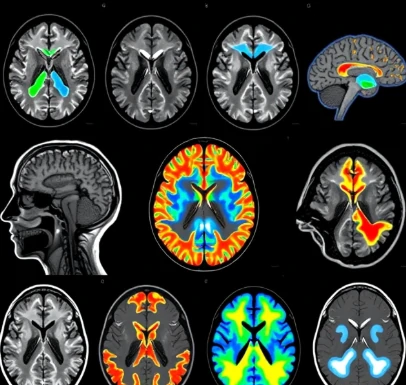
Techniques that visualize the structure or function of the living brain fall under the umbrella of neuroimaging. Structural methods such as MRI and CT reveal anatomy and pathology; functional methods such as fMRI, PET, EEG, and MEG capture aspects of activity or metabolism.
Each modality offers a different trade-off among spatial resolution, temporal resolution, invasiveness, and the physiological variable measured. Structural MRI can resolve millimeter-scale anatomy; fMRI maps hemodynamic correlates of activity; PET quantifies molecular targets with radiolabeled tracers; electrophysiological methods track rapid electrical events.
Neuroimaging has transformed both research and clinical practice. It allows repeated study of the same individual, supports preoperative mapping, and provides biomarkers for disease progression and treatment response. Careful experimental design and statistical rigor are required to avoid over-interpretation of the complex data these methods generate.
- Visualization of brain structure or function
- Includes MRI, fMRI, PET, EEG, MEG
- Balances resolution, speed, and invasiveness
- Central to modern neuroscience and neurology
Comments
No comments yet. Be the first to share a thought.
Leave a comment