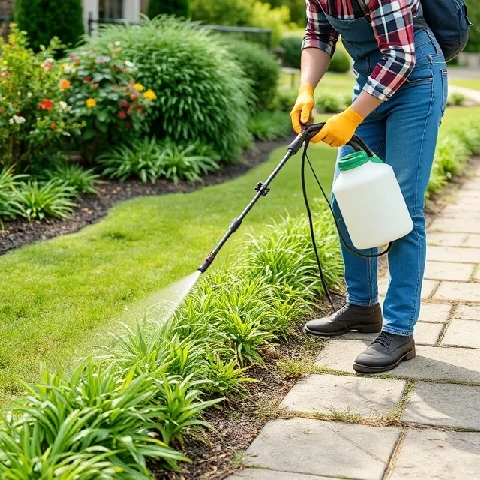
Unwanted plants compete with crops and ornamentals for light, water, and nutrients. An herbicide is a chemical formulated to kill or suppress those plants. Products may be selective, targeting broadleaf weeds while sparing grasses, or non-selective, killing most green tissue they contact.
Application method and timing determine effectiveness and safety. Some herbicides work through the leaves; others are absorbed by roots. Residual types remain active in the soil for weeks or months. Always read the label for rates, weather restrictions, and waiting periods before planting edible crops.
Many gardeners prefer cultural methods—mulching, hand weeding, and dense planting—over chemical control. When herbicides are used, precise application reduces drift and protects desirable plants. Overuse can lead to resistant weeds and environmental concerns.
- Chemical used to kill unwanted plants
- Can be selective or non-selective
- Requires careful application
- Often combined with cultural controls
Comments
No comments yet. Be the first to share a thought.
Leave a comment