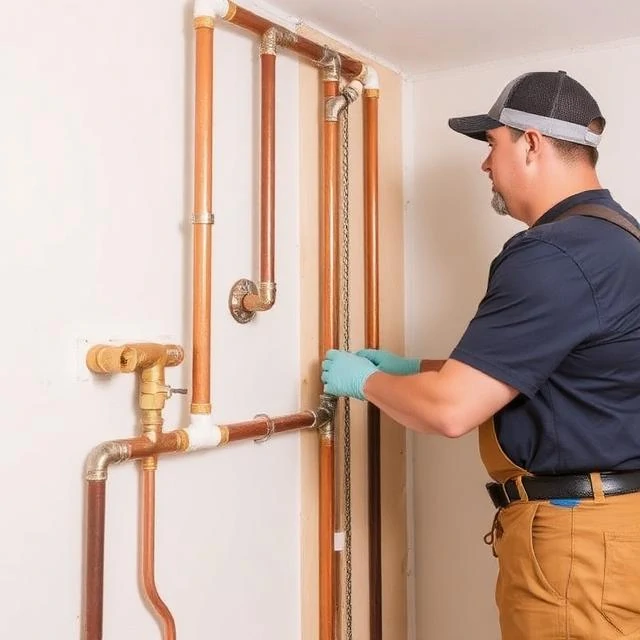
Plumbing is the system of pipes, fixtures, and valves that brings water into a building and takes waste out. It includes supply lines, drain lines, vents, traps, water heaters, and fixtures like sinks, toilets, and showers. It is one of the most regulated systems in construction, and for good reason: bad plumbing can contaminate water, cause floods, and spread disease.
Supply plumbing carries water under pressure from the main to fixtures. Drain plumbing relies on gravity, so pipes must slope correctly. Vent pipes allow air into the system so water flows smoothly and sewer gases do not enter the building. Traps hold a small amount of water to seal out odors.
Plumbing codes set minimum pipe sizes, materials, and installation methods. Copper, PEX, and CPVC are common supply materials. PVC and cast iron are common drain materials. Each has advantages and limitations. The choice depends on cost, local code, and water chemistry.
Plumbing is usually hidden in walls and ceilings, but it shapes the building. Bathrooms, kitchens, and mechanical rooms cluster around plumbing stacks. Moving a toilet is not just a fixture change. It is a construction project.
Comments (3)
Leave a comment