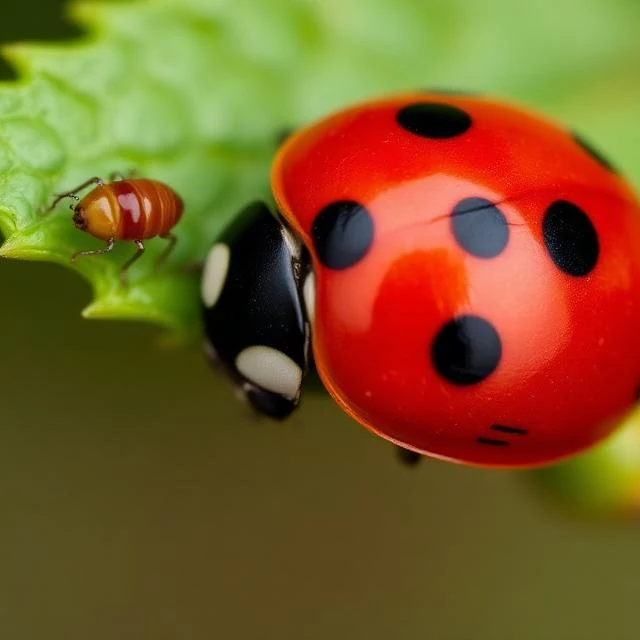
A ladybug, or ladybird in British English, is a small beetle with a domed, spotted back. The name comes from medieval Europe, where the insect was associated with the Virgin Mary. Children still recite rhymes about it in several languages.
For a farmer or gardener, the ladybug is one of the best insects on the payroll. Both adults and larvae eat aphids, along with scale insects, mealybugs, and mites. A single larva can consume dozens of aphids a day during its few weeks of development. The adult stage overwinters in leaf litter, hedgerows, and building crevices, emerging in spring to lay eggs near aphid colonies.
Common species
- Seven-spot ladybird: widespread in Europe and introduced to North America
- Convergent lady beetle: native to North America, often sold commercially
- Asian harlequin ladybird: an invasive species that outcompetes natives
- Mexican bean beetle: a plant-eating relative, not a beneficial
Conservation biocontrol encourages ladybugs by leaving wildflower margins and avoiding broad-spectrum sprays. Some growers buy them by the pint and release them at dusk, though results vary.
Comments
No comments yet. Be the first to share a thought.
Leave a comment