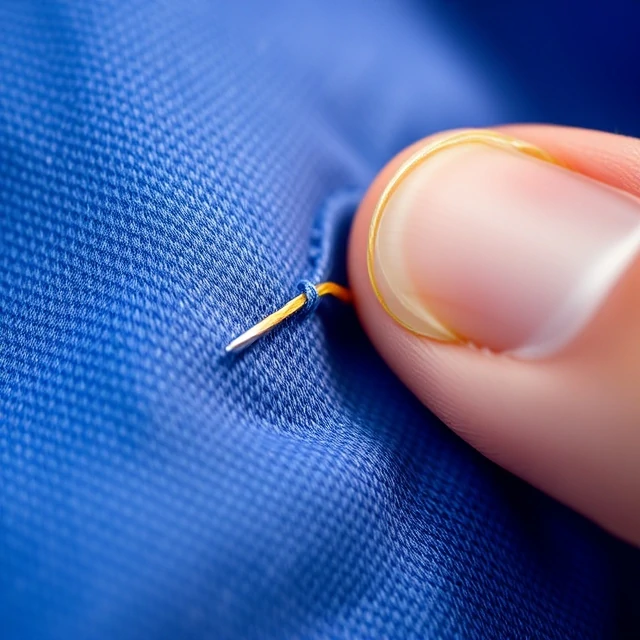
A stitch is a single loop of thread made by a needle. In hand sewing, the needle passes through the fabric, pulls the thread, and creates a loop that holds. In machine sewing, the needle carries the top thread down, and a hook underneath catches it to form a lockstitch. The length and tension of that loop determine whether the seam holds or puckers. A stitch can be functional, decorative, or both.
Hand stitches come in dozens of varieties. Running stitch is the simplest, a straight line in and out. Backstitch is stronger and used for seams that bear weight. Whipstitch wraps around an edge. Blanket stitch finishes raw edges and can be decorative. Embroidery adds hundreds more, from chain stitch to French knots. Knitting and crochet create stitches too, but they interlock loops rather than pierce fabric.
Common hand stitches
- Running stitch — basic straight line for gathering and basting
- Backstitch — strong seam that looks like machine stitching
- Whipstitch — edge finish and joining two pieces
- Blanket stitch — durable edge finish with a looped look
- Slip stitch — nearly invisible join for hems and openings
Stitch length and tension matter as much as the stitch type. Too tight and the fabric puckers. Too loose and the seam gapes. Practice on scrap until the tension feels right.
Comments
No comments yet. Be the first to share a thought.
Leave a comment