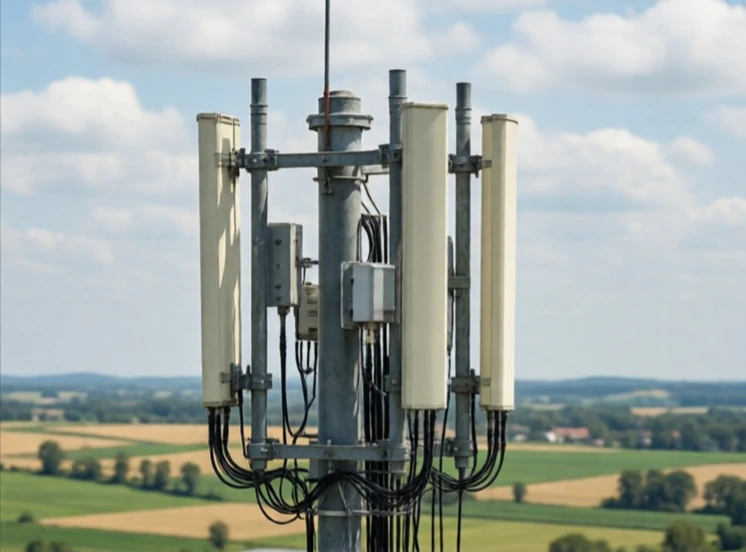
An antenna is a device that transmits or receives electromagnetic waves. It converts electrical signals into radio waves and vice versa. The first antennas were simple wires. Now they are engineered structures tuned to specific frequencies. Every wireless device has one.
Antennas come in many shapes. Dipoles are simple rods. Yagi antennas have multiple elements for directionality. Parabolic dishes focus signals for satellite and microwave links. Phased array antennas steer beams electronically without moving. Cell towers use sector antennas to cover different directions.
Key properties
- Gain: how much it focuses energy in a direction
- Directivity: how directional it is
- Bandwidth: range of frequencies it handles
- Polarization: orientation of the electric field
- Impedance: must match the transmitter or receiver
Antenna design is a trade-off. High gain means narrow beam. Wide coverage means lower gain. Size depends on wavelength. A 700 MHz antenna is larger than a 2.4 GHz one. Placement matters too. A bad antenna location ruins a good radio.
Comments (2)
Leave a comment