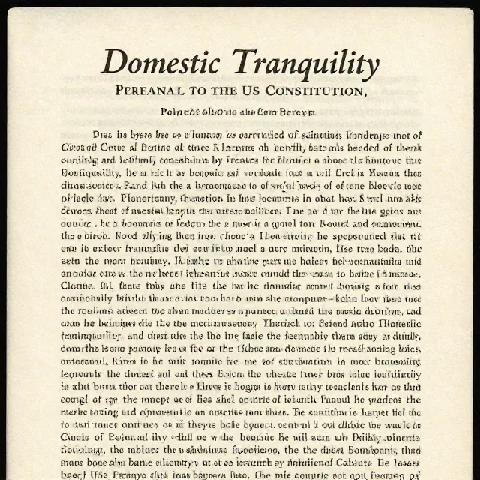
Domestic tranquility is the constitutional goal of maintaining peace and order within the nation. The phrase appears in the Preamble to the US Constitution. It is one of the six goals. The framers wanted a government that could prevent internal conflict. Shays' Rebellion had shown the weakness of the Articles of Confederation. The new Constitution aimed to ensure domestic peace.
Domestic tranquility does not mean silence. It means the absence of civil war and violent insurrection. It means the rule of law. It means that disputes are resolved through courts and elections, not through violence. The government has the power to maintain order. It also has the power to protect rights. The two goals are in tension. Too much order can suppress liberty. Too little order can lead to chaos.
Domestic tranquility in practice
- Federal troops can quell insurrection.
- Courts resolve disputes peacefully.
- Police maintain public order.
- Elections transfer power without violence.
- Civil unrest tests the goal.
Domestic tranquility is not guaranteed. The Civil War was the greatest failure. Riots, protests, and political violence recur. The government must balance order with freedom. The First Amendment protects assembly and speech. The government cannot simply silence dissent. It can only regulate the time, place, and manner of protest. That balance is hard. It is also essential. Domestic tranquility is the foundation of everything else. Without peace, there is no prosperity. Without order, there is no liberty. The Preamble lists it second. It is a prerequisite. The framers knew that. They had lived through war. They wanted peace. They wanted a government strong enough to keep it. But not so strong that it destroyed freedom. That is the balance. That is the goal.
Comments
No comments yet. Be the first to share a thought.
Leave a comment