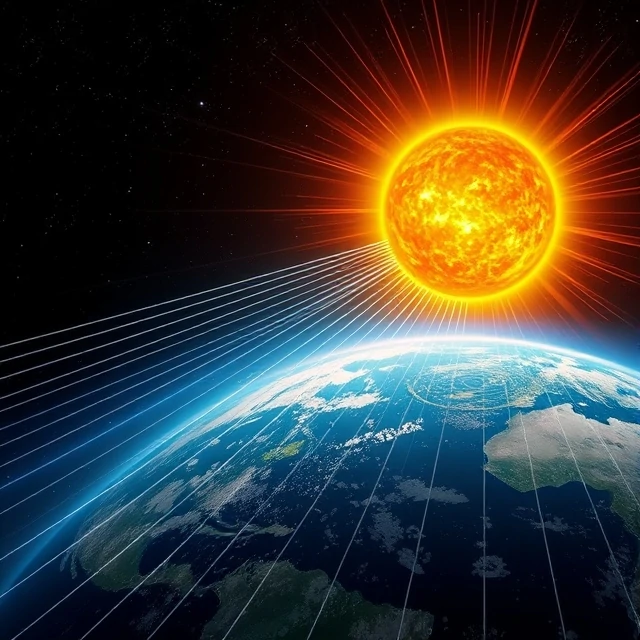
Radiation is the transfer of energy through electromagnetic waves. It is one of the three ways heat moves, along with conduction and convection. Unlike the other two, radiation does not require a medium. It can travel through a vacuum. That is how the sun's energy reaches the Earth. Radiation includes visible light, infrared, ultraviolet, X-rays, and gamma rays. Each has a different wavelength and energy. Infrared radiation is felt as heat. Ultraviolet radiation causes sunburn. X-rays and gamma rays are ionizing, meaning they can damage DNA and cause cancer.
Radiation is not always harmful. Infrared radiation is used in thermal imaging and remote controls. Radio waves are used in communication. Microwaves are used in cooking and radar. Visible light is essential to life. The danger comes from ionizing radiation, which carries enough energy to strip electrons from atoms. That can damage cells and DNA. Sources of ionizing radiation include nuclear reactors, medical imaging, and cosmic rays. Radiation safety involves limiting exposure time, increasing distance, and using shielding. Radiation is a natural part of the universe. It comes from the sun, from rocks, and from space. Life on Earth has evolved with it.
Radiation facts
- Definition. Transfer of energy through electromagnetic waves.
- No medium. Travels through a vacuum.
- Types. Radio, microwave, infrared, visible, UV, X-ray, gamma.
- Ionizing. UV, X-rays, gamma rays can damage DNA.
- Safety. Time, distance, shielding.
Radiation is not the same as radioactivity. Radiation is the energy. Radioactivity is the emission of particles or energy from unstable nuclei.
Comments
No comments yet. Be the first to share a thought.
Leave a comment