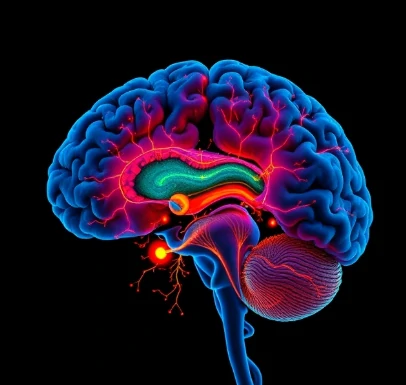
Serotonin is a monoamine neurotransmitter synthesized from the amino acid tryptophan. It is produced primarily in the raphe nuclei of the brainstem and projected widely throughout the brain and spinal cord. In the periphery it is found in platelets and the gastrointestinal tract.
Central serotonin pathways influence mood, appetite, sleep, and impulse control. Many antidepressant medications increase serotonin availability by blocking its reuptake. The relationship is not simple, however; serotonin levels alone do not determine mood, and the therapeutic effects of these drugs appear only after longer-term adaptive changes.
Low serotonin activity has been linked in some studies to increased aggression and impulsivity, though the association is correlational and moderated by many other factors. Serotonin also participates in the regulation of circadian rhythms and in the processing of aversive stimuli.
- Monoamine neurotransmitter
- Synthesized from tryptophan
- Modulates mood, sleep, and appetite
- Target of many antidepressant drugs
Research continues to clarify how serotonin interacts with other transmitter systems to shape complex behavior.
Comments
No comments yet. Be the first to share a thought.
Leave a comment