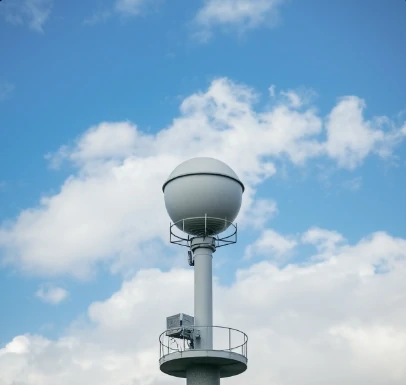
Radar sends out pulses of radio waves and listens for the echoes that bounce back from objects. In meteorology the targets are precipitation particles. The strength of the return indicates intensity; the time delay indicates distance.
Modern weather radars scan the atmosphere in three dimensions, building a volume of data every few minutes. Doppler capability adds velocity information. Dual-polarization allows better identification of rain, snow, hail, and non-meteorological targets such as birds or insects.
Radar is indispensable for short-term warnings of severe storms, flash floods, and heavy snow. Coverage is excellent over land in many countries but still limited over open ocean. Research radars continue to push the limits of resolution and sensitivity.
- Detects precipitation with radio waves
- Provides intensity and location
- Doppler measures motion
- Core tool for severe-weather warnings
Comments
No comments yet. Be the first to share a thought.
Leave a comment