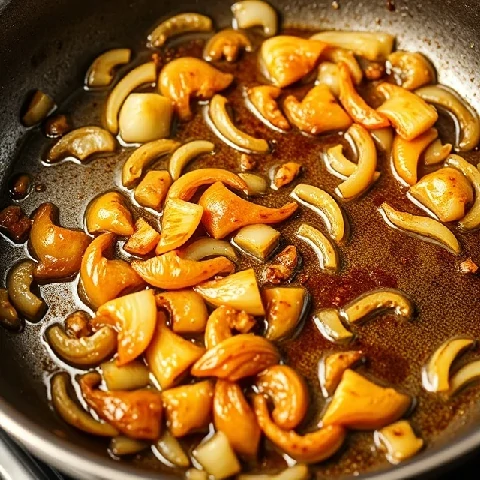
Caramelizing browns sugars in food to develop sweetness and flavor. It is a chemical reaction, not just a cooking method. The sugars break down and recombine into hundreds of new compounds, creating a deep, complex flavor. Onions caramelize into a sweet, jammy mass. Sugar caramelizes into a golden syrup. Meat caramelizes on a hot grill, creating a crust. The reaction is the same. The results are different. The cook controls the heat and the time. The food does the rest.
Caramelization requires heat. The temperature must be high enough to break down the sugars, usually above 150 degrees Celsius. The food must be dry. Water prevents browning. The pan must be hot. The food must be spread out, not crowded. Crowding steams the food instead of browning it. The cook must be patient. Caramelizing onions takes 30 to 45 minutes, not 5. The onions must be stirred occasionally. They must not burn. The line between caramelized and burnt is thin. The cook watches. The cook waits.
Caramelization is not the same as the Maillard reaction. The Maillard reaction involves amino acids and reducing sugars. It browns meat, bread, and coffee. Caramelization involves only sugars. It browns onions, sugar, and fruit. Both create flavor. Both require heat. Both are essential to cooking. The cook who understands both can make food that is deeply flavored and beautifully browned. The cook who confuses them may burn the food. The difference is chemistry. The result is dinner.
Comments
No comments yet. Be the first to share a thought.
Leave a comment